Today I went to a neighborhood called Quiba in the city of Ciudad Bolívar. The reason I went was that, together with some classmates from my program (telecommunications engineering), we helped install Linux on some computers that were donated to a preschool and elementary school there in Quiba.
The place we visited is very, very remote; there’s no electricity or cell phone service, water is only available seasonally, and there are far more children than the infrastructure can accommodate. As soon as you arrive, it’s clear just how precarious the situation is for that community.
Despite everything, they are very cheerful and optimistic, as if they feel no shame or self-pity about their circumstances—simply because they aren’t aware of just how bad things are for them.
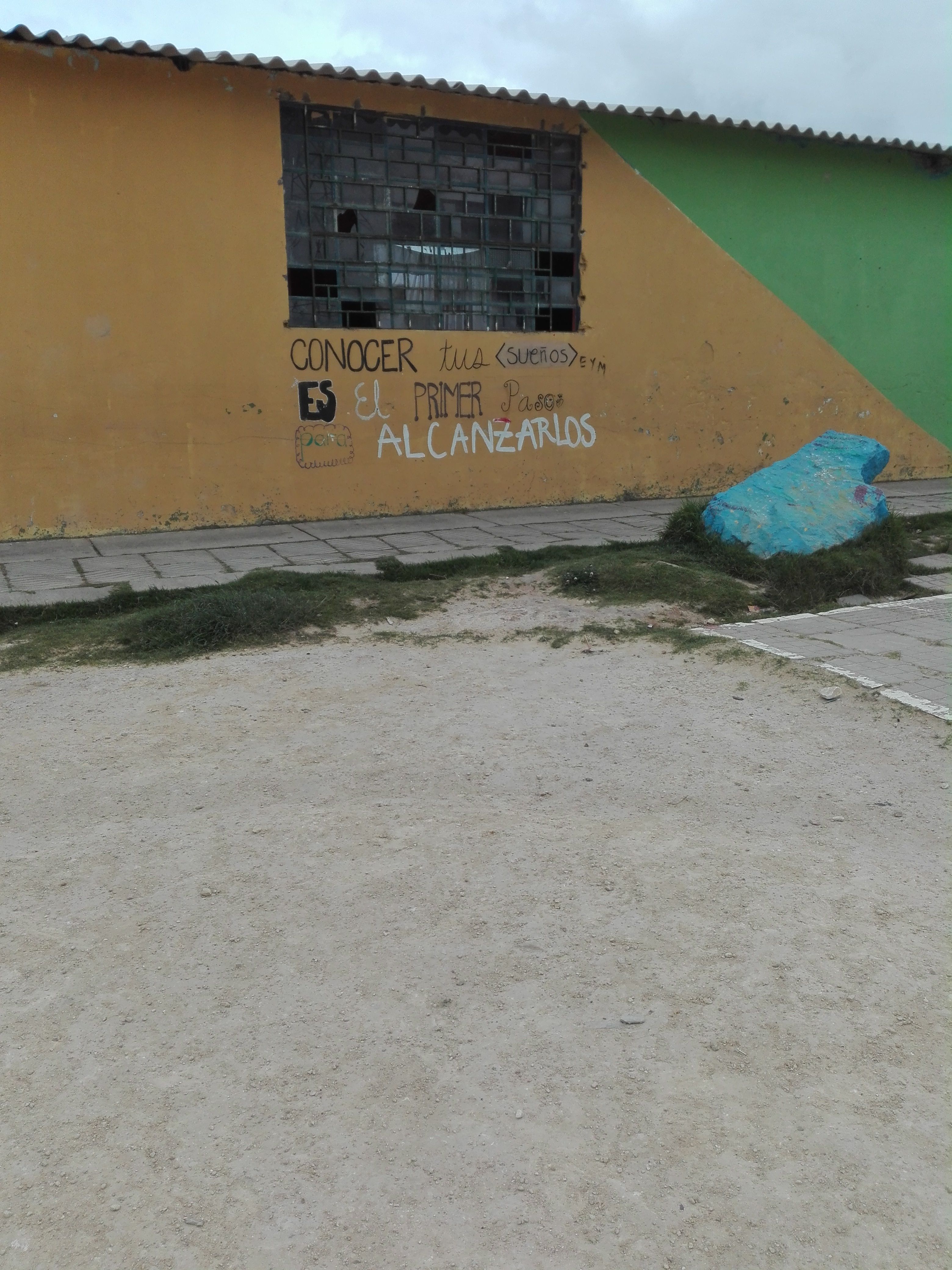
My intention with this piece is not to emphasize how dire their situation is—because their joy and enthusiasm touched my heart—but I do want to reflect on poverty.
It is an injustice that the poor are condemned for lacking an education, for not having the same income level as the middle and upper classes, for being more violent, or for being thieves—yet no one asks whether the poor receive an education or whether the government guarantees them opportunities to lead a more dignified life.
Putting yourself in someone else’s shoes is a difficult exercise, especially when you’ve never stepped outside your comfort zone to dare to see other realities—such as those in Ciudad Bolívar or Cazucá, or those of La Guajira or El Chocó—regions that, in one way or another, society itself has gradually marginalized because they haven’t grown at the same pace as the affluent.
I remember once, about three years ago now, I went to a foundation in Cazucá for underprivileged children. The children there were between 4 and 16 years old, more or less. We spent a Saturday afternoon with them, enjoying cake, music, balloons, and clowns. My friends at the time and I were able to connect with them and ask about their lives and families; Many are the children of prostitutes, drug dealers, and even paramilitaries. In fact, I asked several of them what they wanted to be when they grew up—you’d usually expect them to say things like a police officer, firefighter, nurse, or doctor. But to everyone’s surprise, they answered with things like, “I want to be a Transmilenio pickpocket,” “I want to be a prostitute,” “I want to be a paramilitary, to defend my country.”
Hearing children express these kinds of aspirations is something that continues to shock me, because it suggests to me that there is an entire generation of people who have normalized violence and the most degrading acts, though in reality what shocks and outrages me the most is that society itself allows all of this to happen—that all of this is considered normal.
Jaime Garzón’s words resonate even more powerfully when one faces the harsh reality head-on: “People are shocked when you say ‘son of a bitch’ in public, but no one is shocked when they see a child begging for food on the street.”